Pathogen selection guide · Updated July 20, 2026
All 7 Pathogens in Pathogenic: Traits, Unlocks & Who to Pick
Meet all seven Pathogens, compare their playstyles and trade-offs, and choose the right fit for solo runs, custom shapes or two-player co-op.
Quick answer
Pathogenic has seven playable Pathogens. Bacterium is a simple place to learn the basics; Helminth is commonly built around melee reach; Amoeba and Nanobot focus on shape building; Fungal Spore uses fixed special slots; Diatom is the two-player option; and lil collector changes movement with wall-clinging. Your best choice depends on the controls and build style you enjoy.
Pathogen comparison: traits, trade-offs and unlocks
Use this table for a fast choice, then read the matching section for control tips and build trade-offs. Run strength still depends on Organelle drops and Plasmid upgrades.
| Pathogen | Playstyle | Best for | Unlock |
|---|---|---|---|
| Bacterium | Flexible builds without an unusual movement rule. | Players learning Organelles, connections and room combat. | Check the opening roster; players commonly find Bacterium there. |
| Helminth | Long, segmented body; players commonly build around melee reach. | Players who want to try close-range pressure and projectile-clearing melee builds. | Defeat the Intestine boss. |
| Nanobot | Modular shape, 1 HP start and a Health-to-Armor conversion rule. | Players who enjoy custom layouts and active Armor management. | Condition currently unknown. |
| Fungal Spore | Special Organelle slots with a fixed, non-rotating orientation. | Players who enjoy planning attacks around fixed slot directions. | Condition currently unknown. |
| Amoeba | Three-slot start that grows into a free-form layout. | Players who want direct control over body shape. | Condition currently unknown. |
| Diatom | Two connected halves, one controlled by each player. | Local co-op or Remote Play Together. | Condition currently unknown. |
| lil collector | Fast wall-clinging movement; hold dodge to release. | Players who want unusual mobility and can handle stickier controls. | Players currently use: defeat the Collector, then check the hidden slot. |
Which Pathogen should you pick?
- Start with Bacterium when you want to learn Organelles, connections and room combat without an unusual movement rule.
- Helminth players commonly build around melee reach to clear projectiles and control nearby space. Defeat the Intestine boss to unlock it.
- Choose Amoeba for free-form slot growth or Nanobot for modular building with an Armor-focused survival rule. These are the two clearest solo choices for players who enjoy shaping the body itself.
- Choose Diatom when two people want to control one shared Pathogen. Each player steers one half, so communication matters as much as the build.
- Choose lil collector for fast wall movement and a higher control-learning burden. Hold dodge to release from walls when it sticks in the wrong place.
- Choose Fungal Spore when a fixed orientation and special Organelle slots sound like an interesting layout constraint.
1. Bacterium
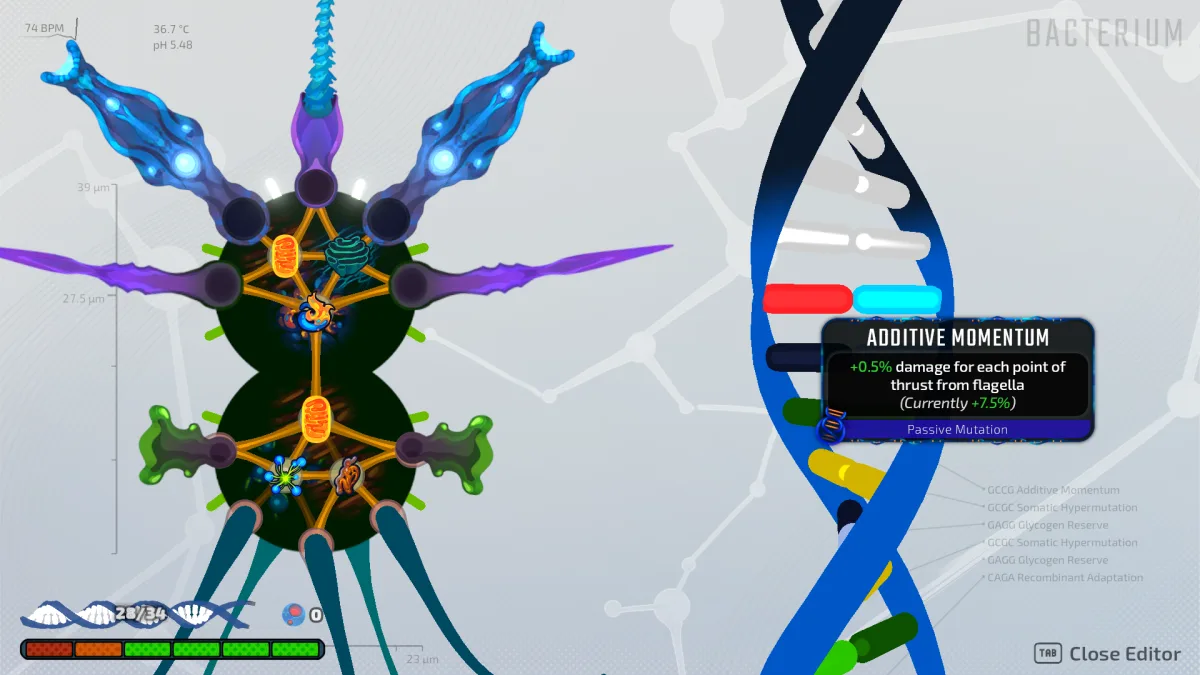
Bacterium is the simplest place to start when you want to learn Organelles and room combat without an unusual movement rule.
Many players use it as a flexible baseline when they want the build—not the character controls—to define their playstyle. It has fewer obvious tricks than the specialist Pathogens, so its strength depends heavily on the Organelles and Plasmid upgrades you combine.
2. Helminth
Helminth’s long, segmented body encourages close-range builds. Helminth players commonly build around melee reach to clear projectiles and control nearby space.
Pick it when you enjoy aggressive positioning and are willing to support melee Organelles with enough reach and protection. A weak melee setup can feel exposed, so do not rely on body shape alone. Defeat the Intestine boss to unlock Helminth.

3. Nanobot
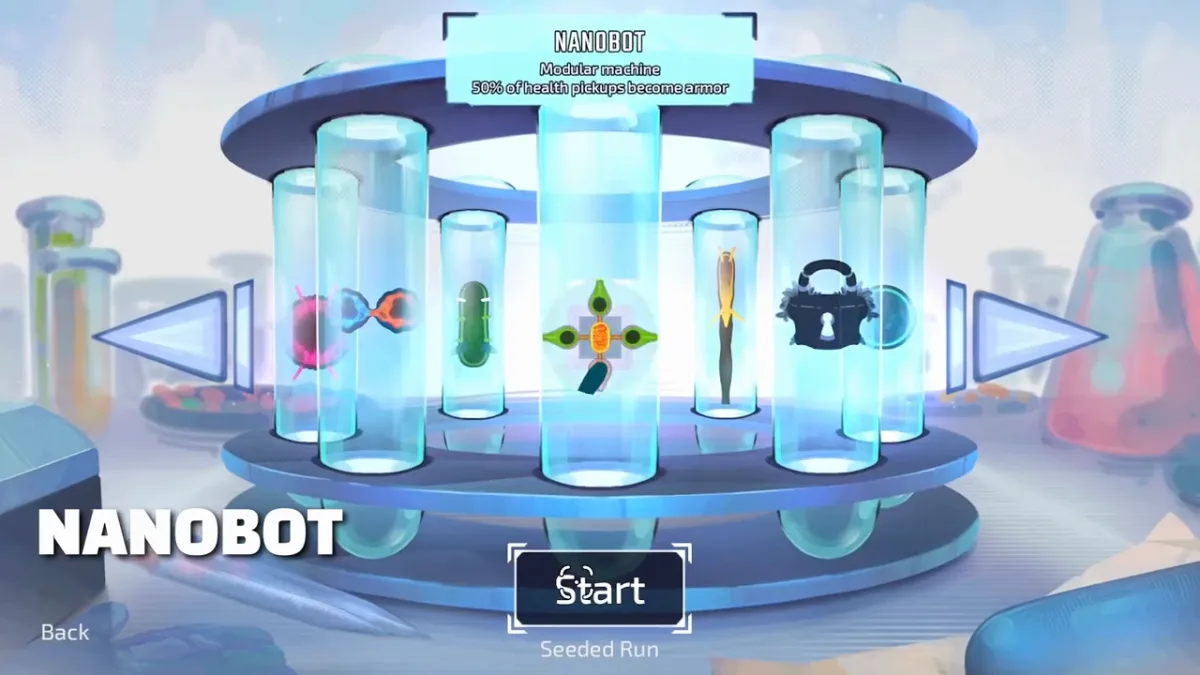
Nanobot is a modular machine rather than an organic cell. It starts at 1 HP, begins with Armor, converts 50% of Health pickups to Armor and expands its shape through modules.
Choose it when planning a custom body and managing Armor sounds more interesting than using a preset shape. The 1 HP opening makes early mistakes costly, so protect the core immediately and treat Armor pickups as part of the build plan. Check its current selection card after balance patches.
4. Fungal Spore
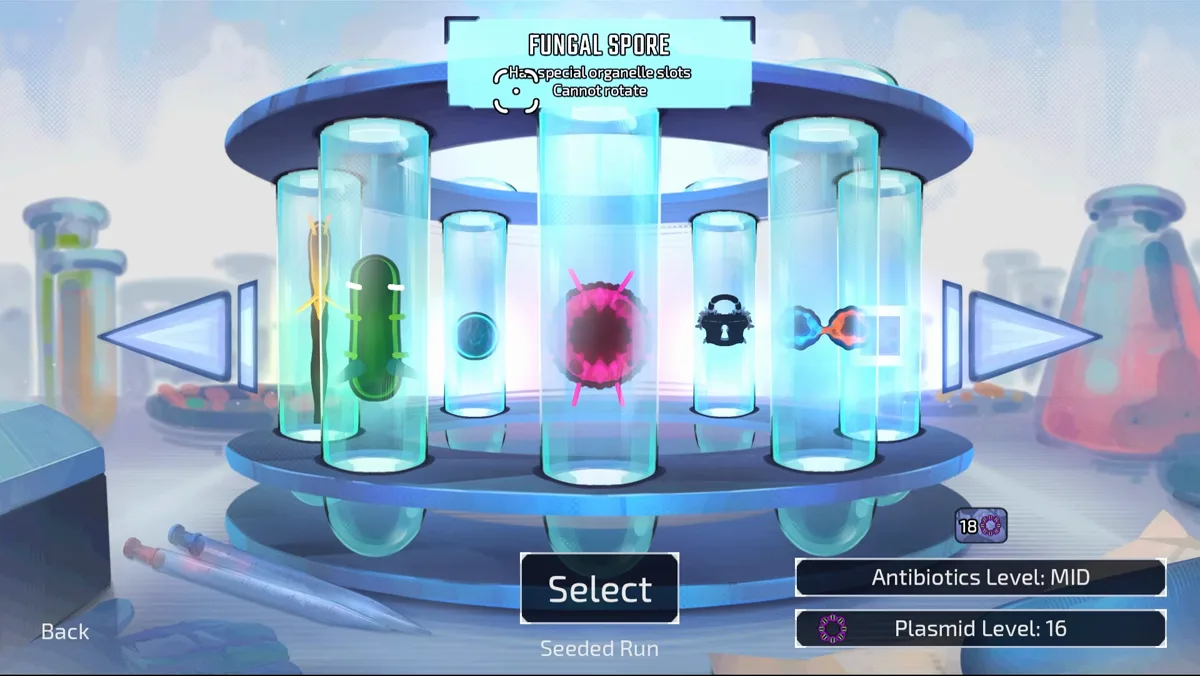
Fungal Spore has special Organelle slots and cannot rotate. That makes it the fixed-orientation option for players who enjoy solving a layout puzzle around permanent slot positions.
Plan important attacks and support effects around the directions you can actually cover. Poor placement is harder to correct than it is on a rotating body, so inspect the slot layout before committing an Organelle.
5. Amoeba
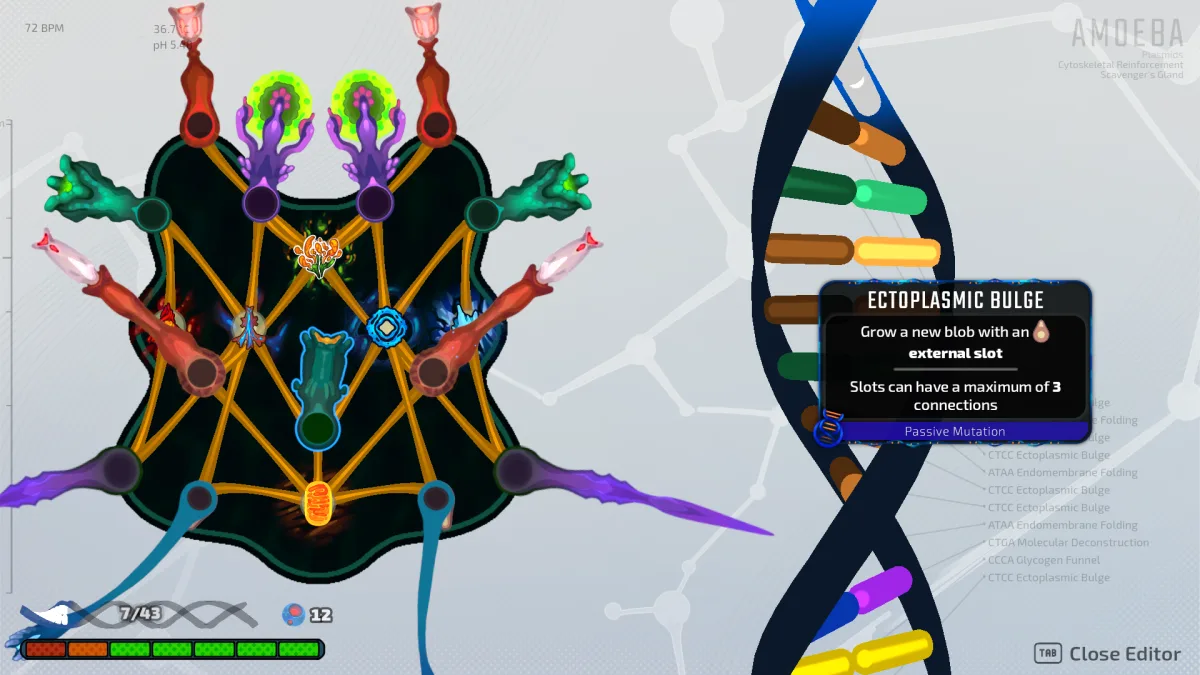
Amoeba is the clearest free-shape choice. It starts with three Organelle slots and gains more shape options through level-up layouts, letting you design an irregular body as the run develops.
The flexible growth is powerful, but the small opening layout is harder and auto-snapping can make precise connections frustrating. Leave enough room around important chains before adding another slot.
6. Diatom
Diatom is the two-player Pathogen. Each player controls one connected half, shown below as the blue and orange bodies. Choose it when two people want to steer and build one shared character.
Its advantage is true shared control; its difficulty is coordination. Pathogenic uses local co-op, while Steam Remote Play Together streams that local session to a remote second player. Agree on movement and build priorities before crowded rooms.

7. lil collector
lil collector is the hidden seventh Pathogen, built around fast wall-clinging movement. Pick it when you want room traversal to feel substantially different from the rest of the roster.
That mobility has a learning cost: it can stick to walls at awkward moments, especially in tight spaces. Hold dodge to release from a wall.

How do you unlock the Pathogens?
Check the opening roster for Bacterium; players commonly find it there. Defeat the Intestine boss to unlock Helminth.
Current players unlock lil collector by defeating the Collector, then checking the hidden roster slot. If it does not appear, continue progression and check the roster again.
The unlock conditions for Nanobot, Fungal Spore, Amoeba and Diatom are currently unknown. Check the Pathogen selection screen after boss clears and major progression milestones so you do not miss a newly opened slot.
Check the Plasmid Tree before you commit
Before spending permanent Plasmids, open the Pathogen’s Plasmid Tree and selection card. Check its starting health, Armor, body rules and available upgrades so you know whether the investment supports the playstyle you want.
Frequently asked questions
How many playable Pathogens are in Pathogenic?
Pathogenic 1.0 has seven: Bacterium, Helminth, Nanobot, Fungal Spore, Amoeba, Diatom and lil collector.
Which Pathogen is for co-op?
Diatom is the local co-op Pathogen, with each player controlling one half. Remote players can join the host through Steam Remote Play Together; the game does not have native online multiplayer.
How do you unlock Helminth in Pathogenic?
Defeat the Intestine boss, then check the Pathogen roster.
What is different about Amoeba and Nanobot?
Both use flexible shapes. Amoeba starts as a three-slot blob and gains slots through level-up layouts. Nanobot expands through modules, starts at 1 HP and leans toward Armor rather than Health.
How do you unlock lil collector?
Current players unlock lil collector by defeating the Collector, then checking the hidden roster slot. If it does not appear, continue progression and check the roster again.