Source-backed guide · Updated 2026-07-22
Pathogenic Beginner Guide: Controls, Builds, and Your First Run
Pathogenic beginner guide: core controls, reading the organelle editor and chain arrows, the five organelle roles, a stable first build, organs, the shop, and seeds.
Published by Pathogenic Game Wiki Editorial Team · Updated 2026-07-22
Quick answer
Pathogenic is a 2D roguelike where you build a pathogen from Organelles and fight through six organs. For your first run: learn the four core controls (move with WASD, aim and shoot with the mouse, dodge with Space, open the editor with Tab and the map with M); read the editor before confirming a part, so the chain arrows actually reach your weapons; build one stable main attack first, then add Mitochondria for power and something for movement or defense; and spend Plasmid fragments between runs on the shortfall that killed you. The deeper guides linked at the bottom cover Overcharge, the full Organelle list, the pathogen roster, and the secret Brain route.
Key facts
- Genre
- 2D roguelike twin-stick shooter inside the human body
- Core controls
- WASD move, mouse aim/shoot, Space dodge, Tab editor, M map
- Organelle roles
- Weapons, Mitochondria (power), Flagella (movement), Internal, Mutations
- Build order
- One stable attack → power → movement or defense
- Organs
- Skin, Intestine, Stomach, Liver, Lung, Heart (Brain is secret)
- Current as of
- Pathogenic 1.0, July 2026
The five Organelle roles and what they do
A first build only needs to cover damage, power, and survival. Use this to decide what to take next.
| Role | What it does | Beginner priority |
|---|---|---|
| Weapons | Deal damage — Secretors shoot, Spikes hit in melee | Take one stable main attack first |
| Mitochondria | Generate Overcharge that powers connected effects | Add once your main attack is connected |
| Flagella | Movement (some double as weapons) | Keep at least one for dodging |
| Internal organelles | Modify effects or add utility (infusers, turrets, cloning) | Add when your chain has room |
| Mutations | Passive bonuses | Pick one that fixes a real weakness |
Before you start
- Move with WASD, aim and shoot with the mouse, dodge with Space, open the editor with Tab, the map with M.
- Open the editor in safe rooms and read the chain arrows before taking a part.
- Build one stable main attack first, then add power (Mitochondria), then movement or defense.
- Judge a part by whether it helps your chain, not just its rarity or panel numbers.
- Before the next organ, confirm your health, resources, and main attack can handle elites.
- Spend Plasmid fragments between runs on the shortfall that killed you last time.
What Pathogenic is
Pathogenic is a 2D roguelike twin-stick shooter. You play a pathogen inside the human body, fighting the immune system through six organs while building your cell from Organelles you loot along the way.
A run is short and repeatable: collect Organelles, connect them so one effect powers or triggers another, clear rooms, beat the organ boss, and push deeper. Between runs you spend Plasmid fragments on permanent upgrades. This page covers the first-run basics; the linked guides go deep on each system.
The four core controls
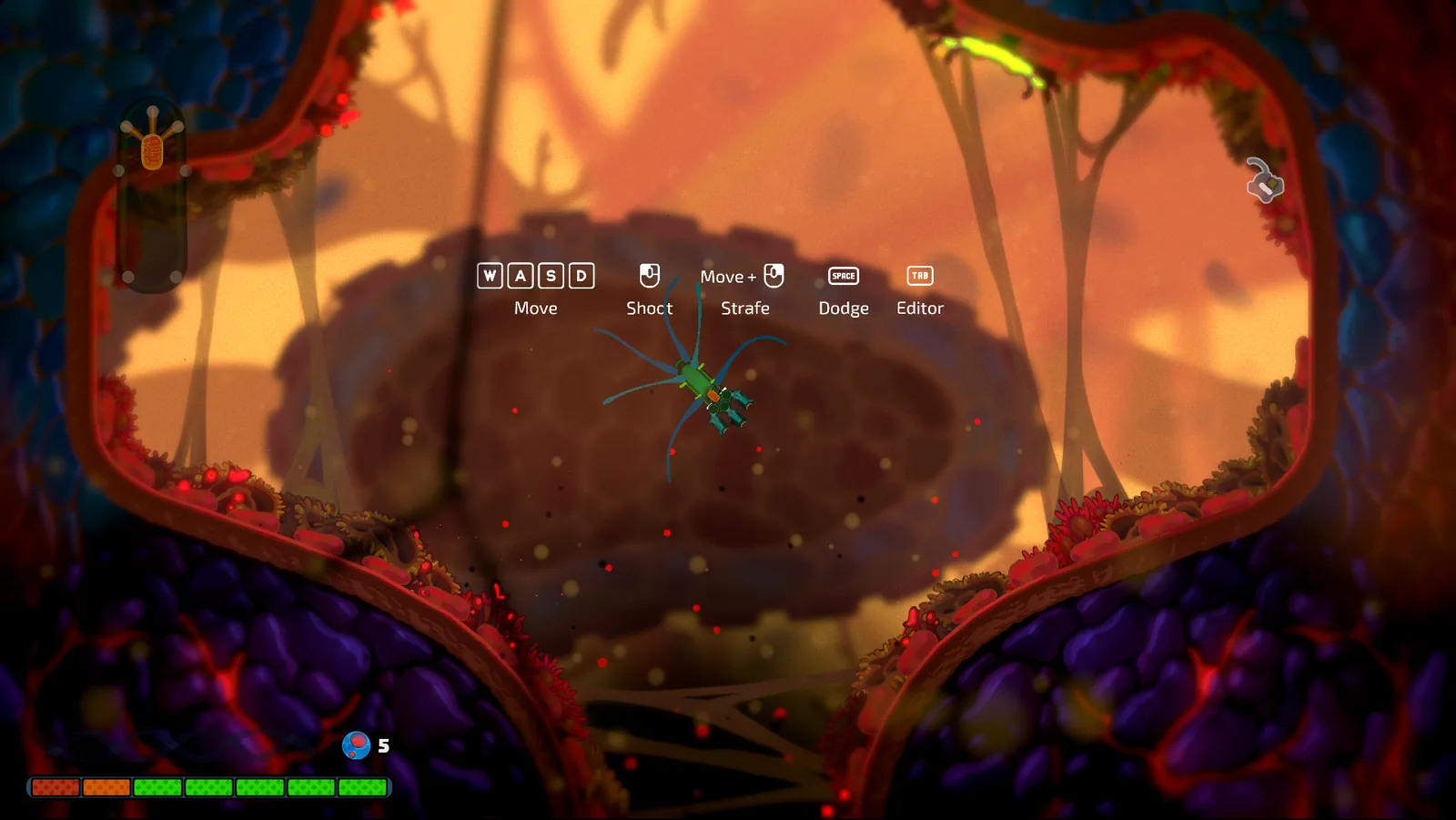
You only need four things to play: move with WASD, aim and shoot with the mouse, dodge with Space, and open the organelle editor with Tab (the map is on M). That is enough to clear your first organs.
Two habits keep you alive: check that your dodge stamina is back before you enter a new room, and keep moving in dense bullet patterns instead of standing still to shoot. Holding the dodge button sprints, trading your ability to attack for speed.
Read the editor: slots, facing, and chain arrows
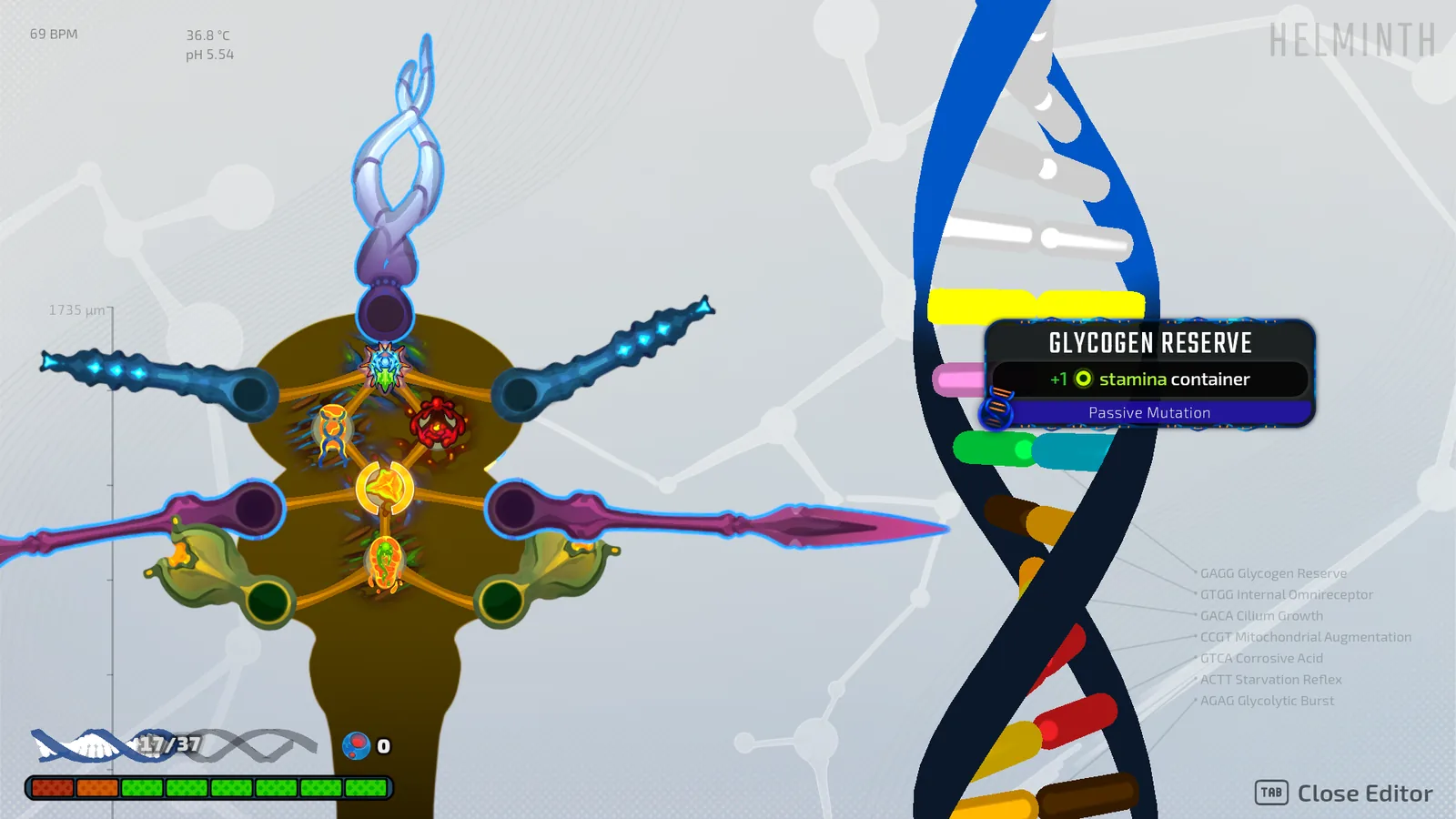
Open the editor in safe rooms (Tab). Every Organelle sits in a colored slot with a facing, and the editor draws chain arrows that show which parts affect which. A part only powers another if an arrow connects them — two pieces sitting next to each other do nothing without an arrow.
A single slot can have at most a few connections, so placement matters. Expand any Organelle to read what it does and what it gains when charged, and hold the expanded view to see Last Room Damage — the cleanest way to tell whether a part is actually contributing.
The five Organelle roles
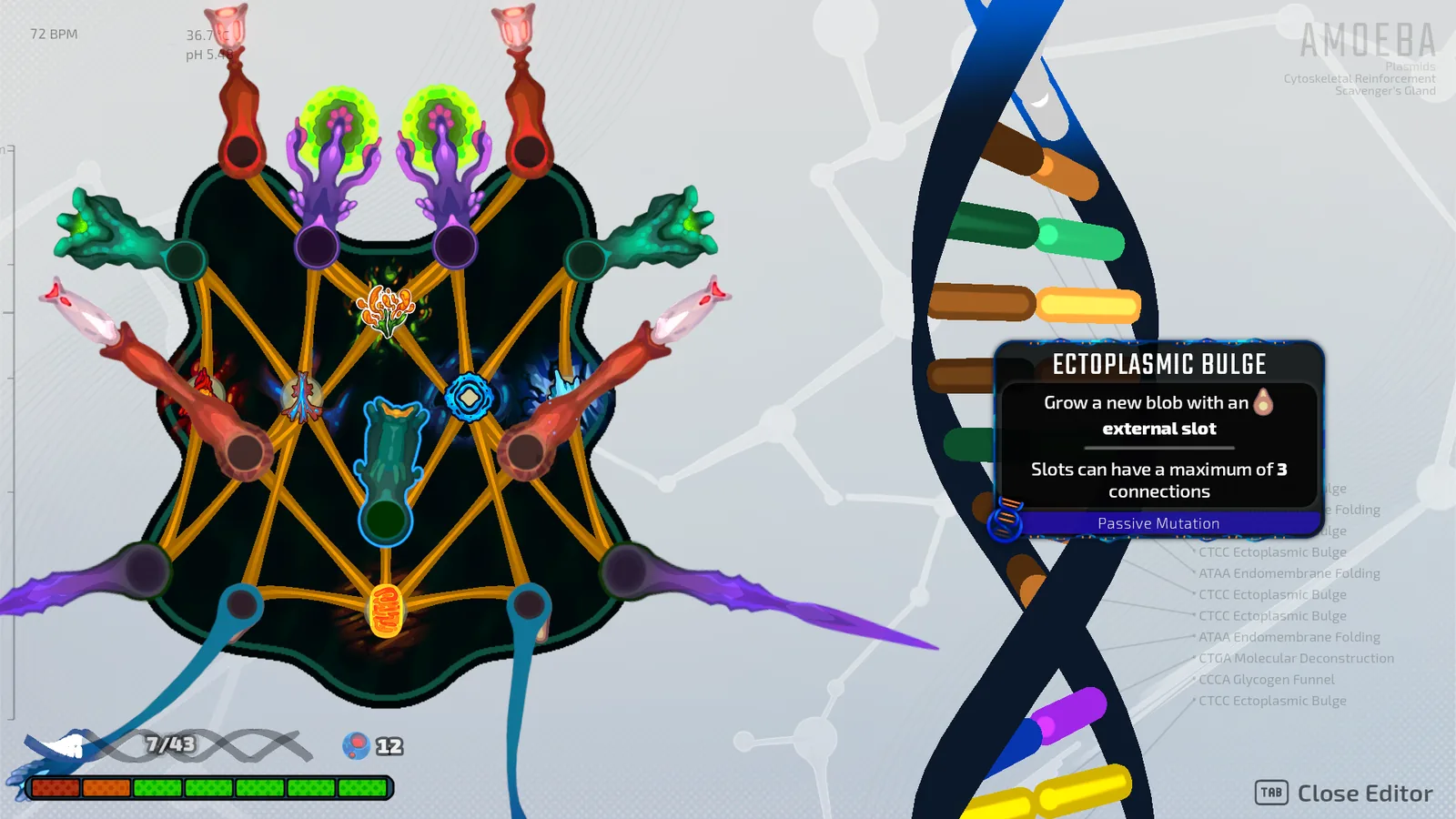
Organelles fall into five roles by what they do. You do not need all of them — you need enough to deal damage, power it, and stay alive.
Weapons (Secretors for ranged, Spikes for melee) deal your damage. Mitochondria generate Overcharge that powers connected effects. Flagella move you (and some double as weapons). Internal organelles modify effects or add utility like turrets or cloning. Mutations are passive bonuses. The table below sums up the priority for a first build.
Build a stable first line
Aim for a stable line, not a pile of strong-looking parts. You want one reliable main attack, enough power to run it, and at least one way to move or survive. Everything else is optional until that core works.
When a new part is offered, do not just compare panel numbers. Ask whether it displaces your main weapon’s connection, blocks an attack angle, or breaks the Overcharge chain. Ranged weapons are easier to learn; melee needs dodge timing and armor. Copying a video’s final build usually works worse than understanding why it connects.
- Keep a main attack that always fires and a Mitochondrion that powers it.
- Keep one movement or defense part so you can dodge and reposition.
- Reroll a part that would push your main weapon out of its connection.
- Reroll a second copy of something you cannot connect to anything new.
Organs, the map, and routing
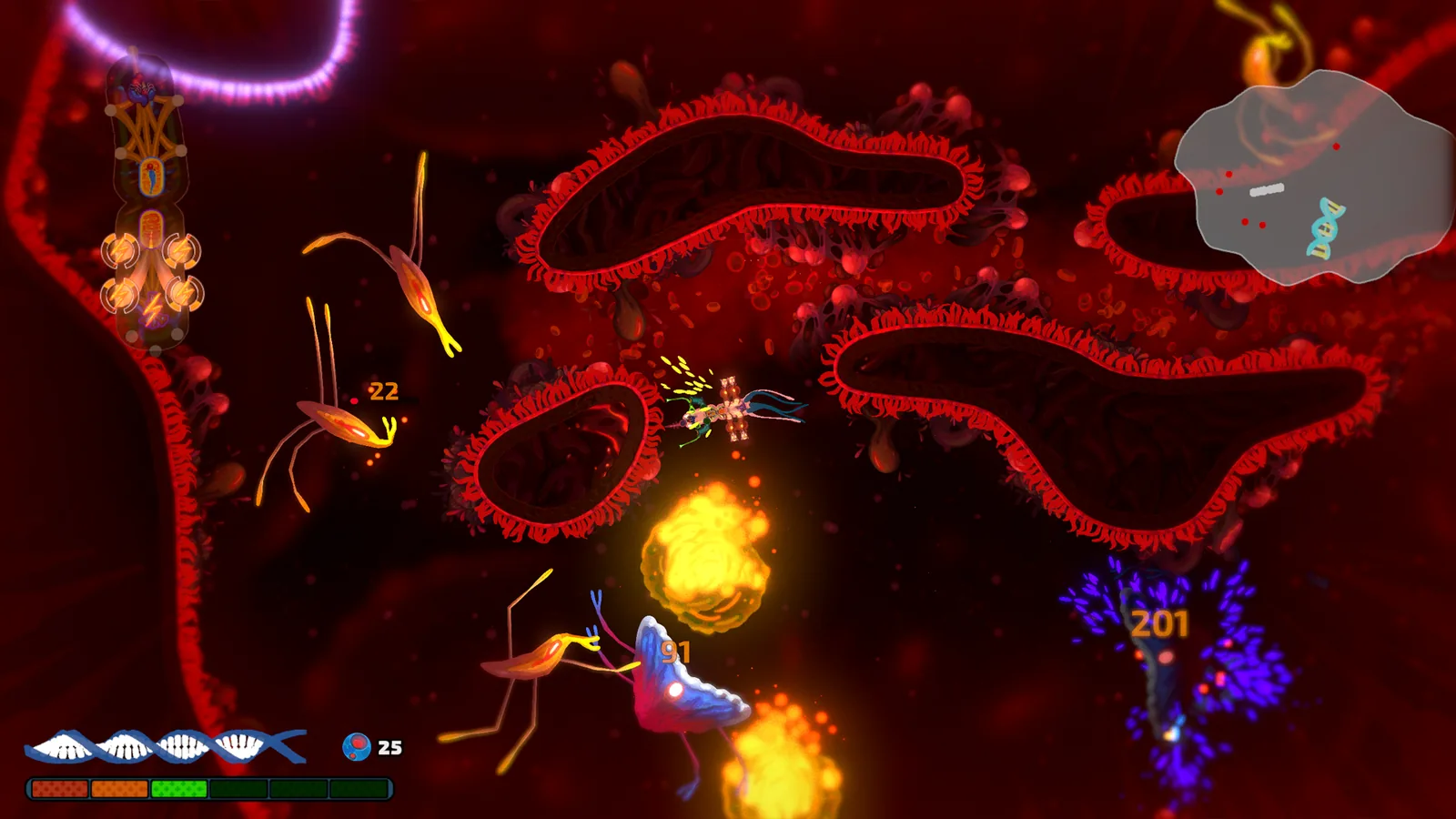
Runs progress through six organs that get steadily less forgiving: Skin lets you test your damage, Intestine and Stomach start testing your routing, Liver throws harder enemy mixes, Lung adds airflow hazards, and Heart has routing you cannot easily reverse (one-way blood flow). Brain is secret content, covered in its own guide.
Use the map (M) to move quickly through cleared areas and to read room difficulty before you enter. Before stepping into the next organ, make sure your health, core resources, and main attack can handle an elite fight — pushing forward with a broken build is how most early runs end.
The shop, special rooms, and rerolls
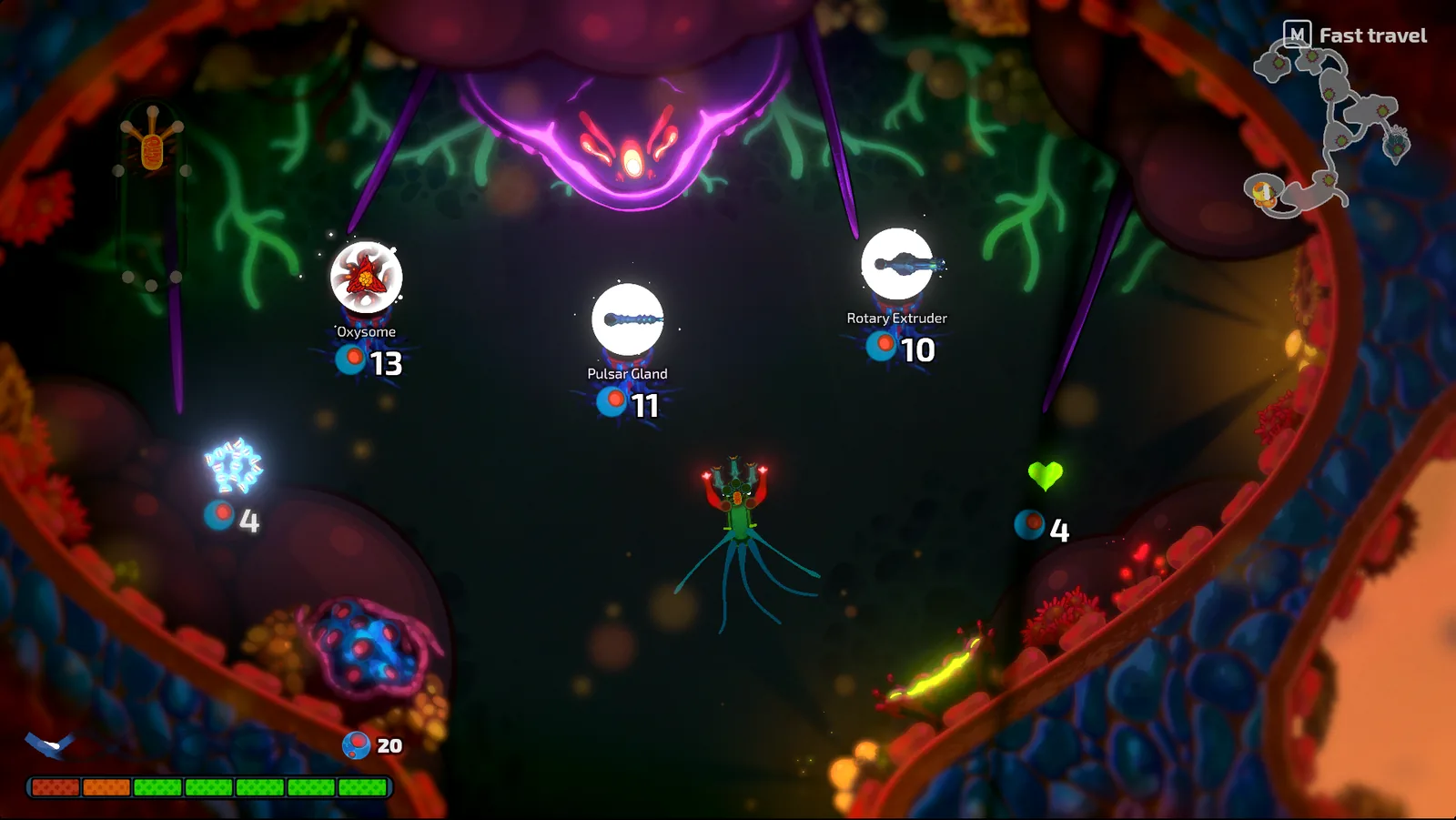
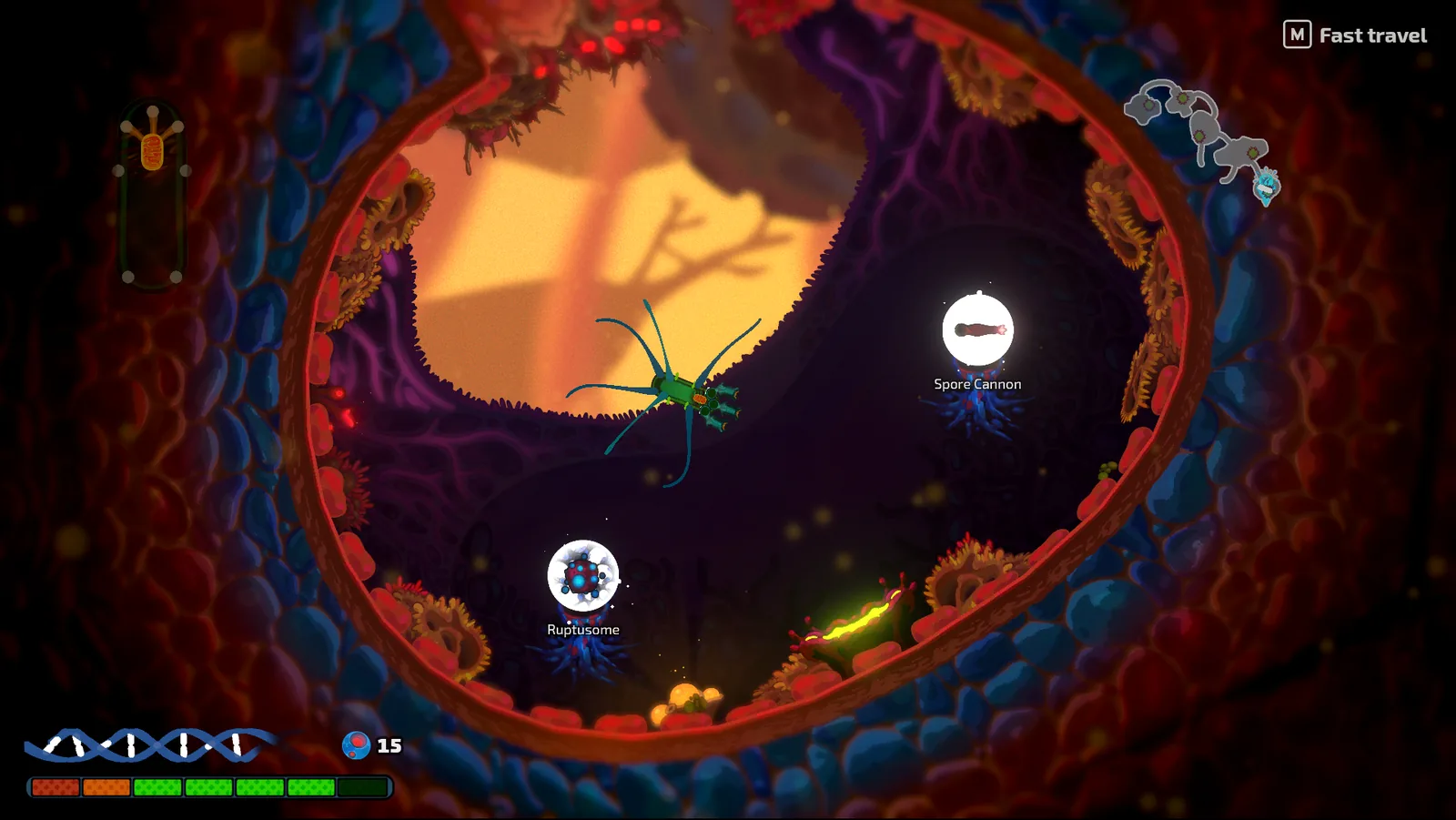
You will meet a merchant area where you can buy Organelles with the resources you have collected. Shops can also spawn a reroll machine so you can re-roll the offered parts, and some special rooms charge an entry fee before you can loot them.
Treat the shop as a way to fill a missing role, not to grab every shiny part. If your main attack already works, spend on power or survivability. You can leave the shop without buying — sometimes the right move is to save your resources for the next organ.
Seeds and the daily challenge
Every run has a seed, so two players with the same seed see the same layout. The daily challenge gives everyone the same daily seed with a random pathogen, random Plasmids, and random antibiotics, then ranks runs on a leaderboard. It is a low-stakes way to try builds you would not pick yourself.
You can also exit a run mid-way and continue later from the last room you finished, so a bad start does not force you to abandon a seed you want to learn.
When you fail: diagnose and spend Plasmids
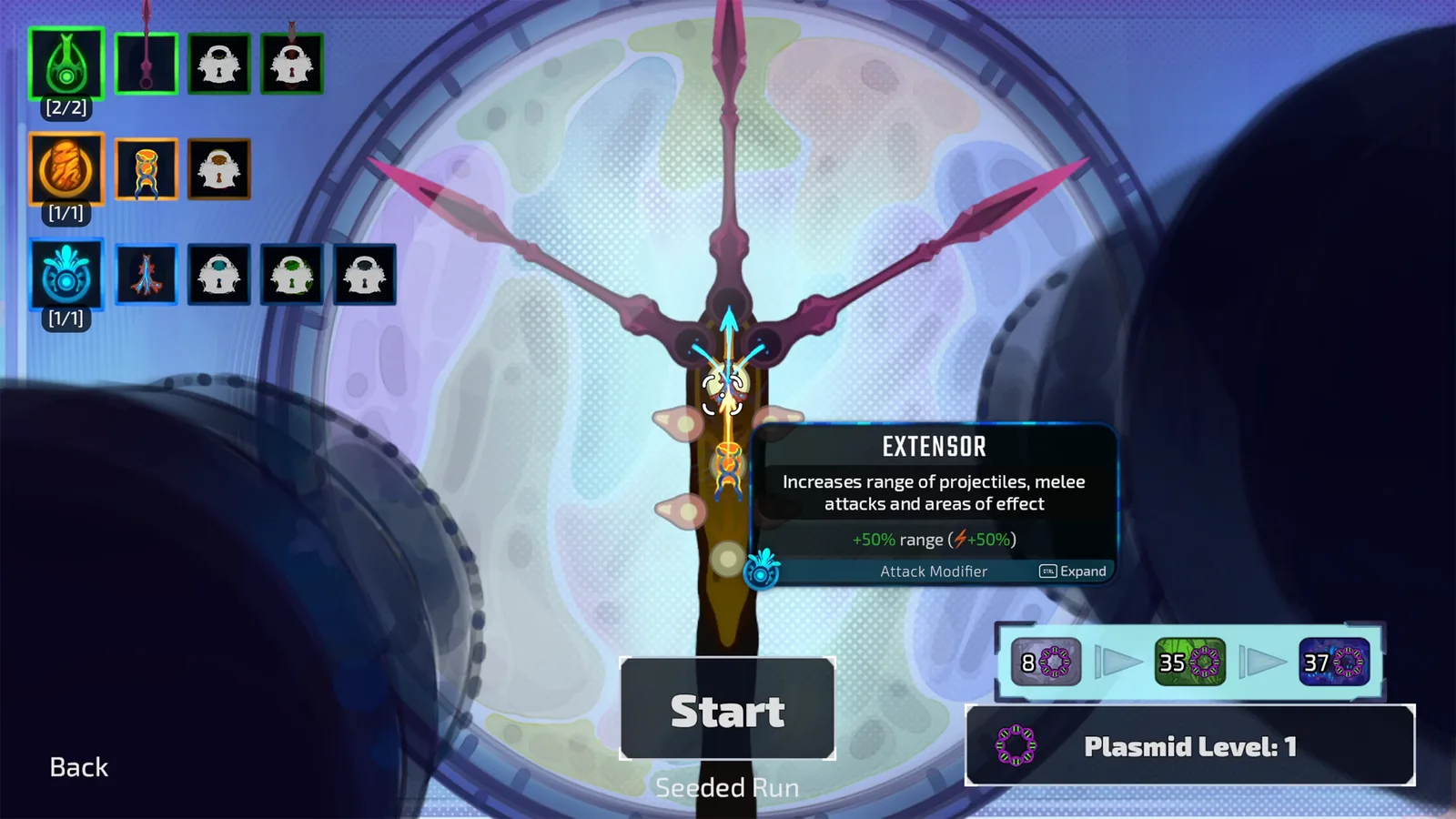
Most early deaths have one of four causes: not enough damage, no dodge stamina when you needed it, too-short attack range, or a build whose connections never actually triggered. After a run, pick the cause that killed you and spend your Plasmid fragments on the upgrade that addresses it.
In your next run, change only one or two core choices. That makes it obvious whether the change helped — changing everything at once teaches you nothing.
Where to go deeper
This page stays at the basics on purpose. Once a system clicks, open the matching guide below: Overcharge and Mitochondria explain the power system, the Organelles hub lists every part, the roster guide compares the seven pathogens, and the Brain guide covers the secret route. The Burn build guide shows one complete build end-to-end.
Frequently asked questions
Which pathogen should I start with?
Pick one whose Plasmid tree and starting Organelles you understand. Players find that a pathogen with steady growth across a run beats one with a single strong starting weapon. The roster guide compares all seven.
Ranged or melee for a first build?
Ranged. Secretors let you learn enemy patterns from a distance. Melee deals high damage but needs tight dodge timing and armor, so it is a better second build than a first one.
Why is my build doing no damage?
Check the chain arrow reaches your weapon, that a Mitochondrion is powering it, and that the trigger is met. Open the expanded tooltip and read Last Room Damage — a part showing zero has a broken connection or trigger.
What are Plasmid fragments?
Permanent currency earned each run and spent between runs on the Plasmid tree. Spend it on the upgrade that fixes the shortfall that killed you, not on a generic path.
Is there a daily challenge?
Yes. The daily challenge gives every player the same daily seed with a random pathogen, Plasmids, and antibiotics, and ranks runs on a leaderboard. It is a good way to try unfamiliar builds.
Where do I learn Overcharge, the Organelles, and the Brain?
In the linked guides at the bottom of this page. This beginner guide covers the first-run basics; each deeper guide takes one system all the way.